The Border as the Bargain: Inside One Collector's Search for the Perfect Edge
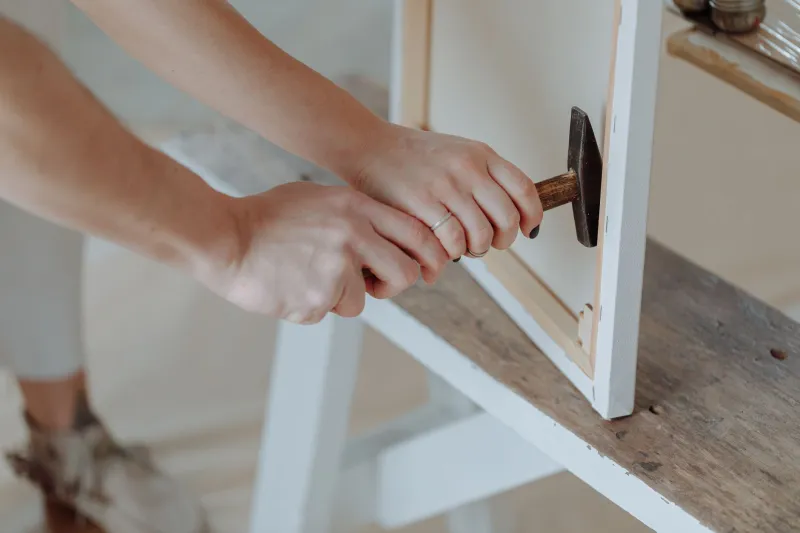
The work of art ends where the frame begins — or so the conventional wisdom goes. Spend an afternoon with the people who build those borders, however, and a different picture emerges: the frame is not the end of the artwork but an argument about it, one that carries real financial and conservation consequences.
Margaret Osei, a Chicago-based collector who began acquiring works on paper five years ago, recently decided to have three pieces framed properly. What she thought would be a straightforward errand became a three-week education in materials, margins, and money.
Three Consultations, Three Philosophies
Her first stop was a national framing chain, where a ready-made profile and standard glass could be had for under $200 per piece. The consultation lasted fifteen minutes. The second was an independent custom shop in the West Loop, where a framer spent nearly an hour discussing mat bevels and pulled out samples of museum glass. The quote: roughly $900 per work.
The third consultation was with a conservation framing studio that works with several Midwest institutions. There, Osei was asked questions no one else had raised. What is the paper's fiber content? Has the work ever been hinged before? Will it hang on an exterior wall? The estimate came in north of $2,500 per piece.
The spread is not arbitrary. Each tier represents a fundamentally different theory of what framing is for.
What the Money Actually Buys
"People think they're paying for wood and glass," says Dana Whitfield, a paper conservator who consults for private collectors. "They're paying for time — the time the work survives."
At the conservation tier, the difference is largely invisible. Rag board instead of wood pulp, which won't migrate acids into the sheet. UV-filtering glazing. Hinges made of Japanese tissue and wheat starch paste rather than pressure-sensitive tape. None of it photographs well; all of it matters decades later.
The middle tier buys aesthetics and decent protection. The budget tier, conservators note, is where damage begins: acidic mats that burn a brown line into paper over ten years, glazing that lets daylight bleach pigments, backing boards that off-gas.
The Market Reads the Frame
There is also a commercial dimension. Appraisers and dealers acknowledge, sometimes reluctantly, that presentation shapes perceived value. A work arriving at a resale in a compromised frame — or worse, one that shows it was glued down or trimmed — raises questions about the work's condition history. A well-documented conservation framing job, with materials receipts, reads as evidence of care.
"When a collector brings something in and the frame is doing its job, I start from a position of trust," one gallery director told us. "When the frame has been its enemy for twenty years, I start from a position of doubt."
That said, the market punishes over-framing too. An ornate, period-inappropriate presentation on a contemporary minimal work can read as a misunderstanding of the piece — a signal to savvy buyers that the previous owner didn't quite get it.
Where Osei Landed
In the end, Osei split the difference. One work — a drawing she intends to hold long-term — received full conservation treatment. Two others went to the independent shop with upgraded glazing and rag mats, a compromise she describes as "honest about my budget and honest about my intentions."
Her advice to newer collectors is to think of framing as the first act of stewardship rather than the last act of decorating. "The frame is the only part of the artwork you actually touch," she says. "You should know what you're holding."
For a market increasingly attentive to condition, provenance, and longevity, the edge of the work — that quiet border of board, glass, and gilt — may be the most legible part of the whole.