The Dark Weeks: Where an Exhibition Actually Begins
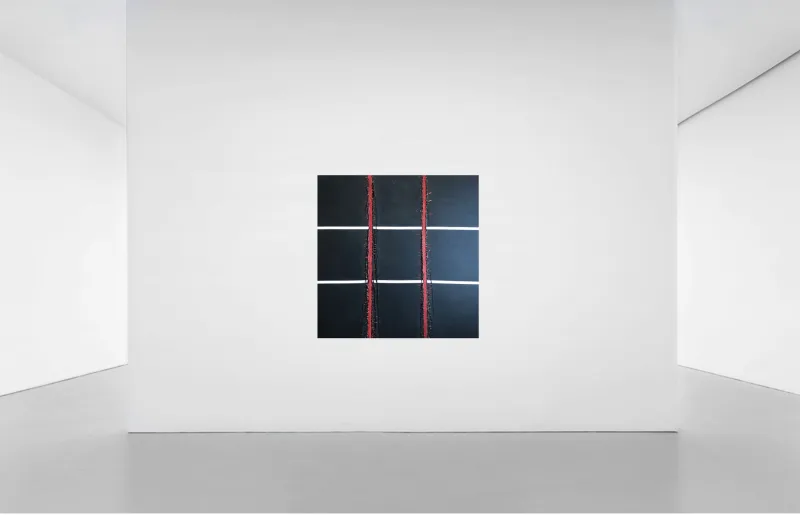
The gallery closes at six on a Saturday. By Monday morning, the crated paintings are gone, the vinyl lettering has been peeled from the entry wall, and the front desk smells faintly of latex paint. For the next three weeks, this well-lit room in Chicago's West Loop will be effectively invisible to the public — listed on the website as "closed for installation," as though the gallery were merely resting.
It is not resting. It is doing the work that makes the next show possible.
The Calendar Has a Hidden Middle
Visitors tend to imagine the exhibition calendar as a series of openings — bright, crowded, photographed. Directors know it as a series of seams. The days between de-installation and reinstallation are where the actual craft happens: walls patched and sanded, sightlines reconsidered, insurance certificates chased across three states, and the odd crate discovered to be two inches too tall for the freight elevator.
At mid-size American galleries — the ones operating on annual budgets that would barely cover a single blue-chip acquisition — these dark weeks are where the margin for error lives. There is no installation crew on retainer. There is a registrar, a preparator, and whoever else can hold a level.
Patching, Then Reconsidering
The first days are physical. Every screw hole from the previous exhibition's wall labels gets filled. Scuff marks at knee height — the universal signature of museum carts — are sanded and repainted in the gallery's proprietary shade of white, a color mixed by a preparator who has worked there long enough to have opinions about undertones.
But the labor is as much intellectual as manual. With the walls bare, the director can finally see the room as it is rather than as the last show made it. This is when floor plans get redrawn. A doorway that seemed irrelevant during planning now reads as an interruption. A wall that was supposed to carry six paintings reveals itself, in the empty light, as a wall for four.
"The room tells you things when it's empty that it never tells you on paper," one Midwest gallery director told us, asking to speak generally rather than about a specific program. "The checklist is a hypothesis. The dark weeks are the experiment."
The Paperwork Nobody Photographs
While the preparator works, the registrar works differently — on the phone, mostly, and in spreadsheets. Loan agreements for borrowed works are renegotiated when couriers fall through. Condition reports are updated after a work returns from a museum tour with a new, faint scratch that no one wants to assign blame for. Certificates of insurance are reissued with dates that keep moving.
This is the unglamorous infrastructure of the American art market, and it is almost entirely invisible from the sales floor. A gallery that handles contemporary painting might be coordinating with a private collector in Santa Fe, a foundation in Baltimore, and an artist's studio in Bushwick — all for a single wall of the next exhibition. Each loan carries its own shipping requirements, its own vanity of handling instructions, its own quiet anxieties.
When it goes well, nobody notices. When it goes badly, the opening is what absorbs the failure — a gap on the wall, a reproduction standing in for a painting stuck in customs.
Rehanging by Instinct
Somewhere in the second week, the crates arrive, and the gallery's rhythm changes. Works lean against walls in the order they were shipped, not the order they'll hang. The director walks the floor with a pencil and a printed checklist, revising.
Here the process becomes genuinely intuitive. Heights are adjusted by eye and argued about. A canvas that was slated for the entry wall is moved to the back room because the light through the front window does something unkind to its varnish at four in the afternoon. The hanging, done well, looks inevitable. It is anything but.
Veteran preparators describe this as the most satisfying part of the cycle — the moment when a room stops being a construction site and starts being a composition. It is also the part most analogous to the studio practice of the artists on the walls: iterative, private, judged only later by strangers.
Why It Matters to Collectors
For collectors, understanding the dark weeks reframes what an opening actually is. The seamless hang, the confident adjacency of works, the labels that read cleanly at eye level — none of it is automatic. It is the product of weeks of invisible decision-making by people whose names appear nowhere on the checklist.
It also explains, in part, why the gallery calendar breathes the way it does. Those "closed for installation" gaps are not dead time; they are the cost of doing exhibitions properly in a market that rewards polish. A gallery that never goes dark is either larger than it looks or cutting something out of the process — and the wall usually reveals which.
The next time a show opens with that uncanny sense of rightness — every work in its place, the room humming — consider the weeks before it. The spackle dust, the revised floor plans, the phone calls to a courier in New Jersey. The exhibition you see was built in the one you didn't.