Latitude of a Painting: How Geography Quietly Rewrites the Art You Buy
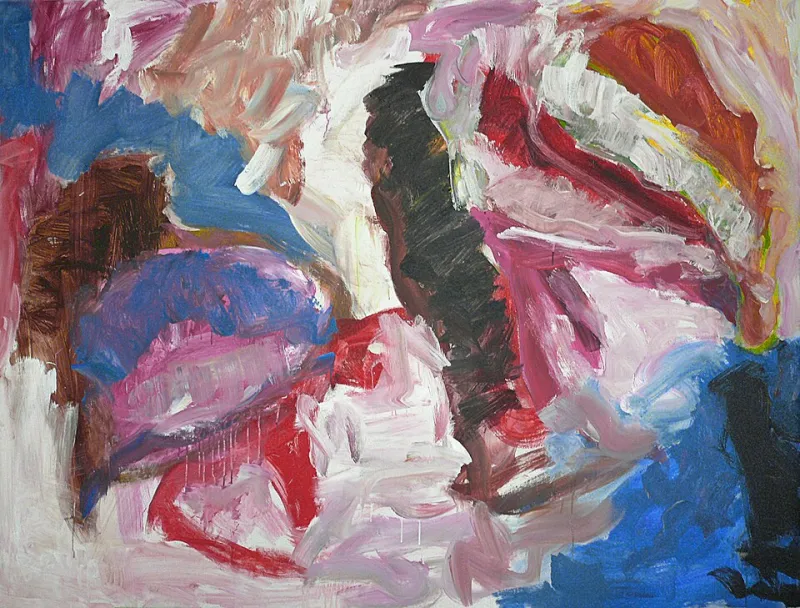
Photo: Fons Heijnsbroek, CC0, via Wikimedia Commons
The crate arrived in Santa Fe on a Tuesday, having traveled from a gallery in Manhattan where the painting had been, by every account, a sensation. Three weeks later, the collector called her advisor. The work was beautiful, she said. It was also, somehow, gone. Not physically — it still dominated the living room wall of her Territorial-style home — but visually. The saturated terracotta field that had pulsed under the cool, recessed lighting of a Chelsea booth seemed to dissolve into the plaster behind it. The wall, the light, the altitude, even the habit of leaving windows open to the high-desert afternoon: everything about New Mexico had conspired to swallow the painting whole.
Ask anyone who moves art for a living and they will tell you this is not a rare story. It is the rule. A painting is not a fixed object so much as a negotiation between pigment and place, and America — with its thirteen latitudinal bands, its regional architectures, its wildly divergent interior cultures — negotiates hard.
The Physics of Taste
Start with light, because everything starts with light. The Southwest receives some of the most intense, warm-spectrum daylight in the country, filtered through thin, high-altitude air. The Pacific Northwest, by contrast, lives under a soft, diffuse, blue-gray luminance that renders color differently — cooler, flatter, more restrained. A cadmium-heavy abstract that blazes in an Albuquerque great room can turn strangely muted in a Portland loft with north-facing windows.
"People think they're buying a painting," says a senior art handler who has installed collections in twelve states and asked not to be named because her clients value discretion. "Really, they're buying a painting-plus-a-wall-plus-a-window-plus-a-time-of-day. I've hung the same piece in Miami and in Boston and it was two different artworks. In Miami, the white walls and the glare made it electric. In Boston, in a brownstone with warm sconces, it went melancholy. The client loved it more in Boston. Go figure."
Architecture compounds the effect. The white-cube gallery is a fiction engineered to flatter art; American homes are not. A ranch house in Palm Springs with clerestory windows and terrazzo floors will read a canvas one way. A prewar apartment on the Upper West Side — radiator heat, crown molding, honey-toned floors — will read it another. The regional vernacular is not neutral scenery. It is part of the work's viewing condition.
The Cultural Thermometer
But light is only half the story. The other half is what advisors politely call "collector culture," and what everyone else might call the local temperature of taste.
In Santa Fe and Marfa, a kind of chromatic bravery is the norm — collectors raised on O'Keeffe and minimalism expect art to hold its own against big skies and adobe whites. In the Hamptons, the prevailing interior is a study in restraint: pale linen, weathered oak, art that whispers. In Houston, where collections are serious and climate control is a religion, the wall is a stage and the painting is expected to perform under museum-grade lighting regardless of what the sun is doing outside.
"A canvas that sings in Santa Fe goes quiet in Seattle for two reasons," one art advisor explains. "One, the light is genuinely different — that's physics. Two, the eye of the viewer is different. Seattle collectors have been trained by a decade of Northwest school sensibility and a certain Nordic-adjacent minimalism. A hot orange field reads as noise to them. The same field in Taos reads as home."
This is not snobbery. It is context, and context is destiny for objects that exist purely to be looked at.
What the Professionals Know
Art handlers, who see more walls than anyone, develop an almost folkloric knowledge of regional difference. They know that Florida collectors battle humidity and glare in equal measure, which pushes them toward works on panel and away from delicate works on paper. They know that Chicago collectors, living with lake-effect gray for half the year, gravitate toward paintings with internal light — luminism, however disguised. They know that a collector in Scottsdale will hang something over a fireplace that a New York advisor would veto on conservation grounds alone.
Consultants have learned to work with this rather than against it. The savviest ones now do what might be called a site reading before a sale: visiting the home, noting the orientation of windows, the color temperature of the lighting, the dominant materials in the room. Some ask clients to photograph the intended wall at three times of day. It sounds fussy until you watch a painting that was merely liked become, after the right placement, a painting that is loved.
"The mistake is treating placement as an afterthought," the advisor says. "The painting you fell for in the gallery doesn't come home with you. A version of it does — a version filtered through your zip code. Your job is to give it the best possible version of itself."
The Same Work, Different Lives
None of this diminishes the artwork. If anything, it restores something the art market tends to flatten: the fact that a painting lives in the world, subject to weather, walls, and the temperaments of the people who live beside it. The artist made a thing; the geography finishes it.
There is a lesson here for collectors priced out of certainty and for artists wondering why certain works travel well and others don't. The market loves to talk about provenance and condition reports. It talks far less about latitude — about the quiet, regional physics and psychology that decide whether a canvas arrives in a home as a revelation or a stranger.
The painting that failed in Santa Fe eventually found its wall: a Manhattan apartment with low ceilings, dimmable halos, and plaster the color of oatmeal. Under that careful, cave-like light, the terracotta field did what it had done in Chelsea all along. The collector, to her credit, kept the New Mexico house and bought a different painting for it — one that, as she put it, "belonged to the desert."
Every artwork, it turns out, has a geography. The smart money learns to read the map before it buys.