Ledger and Legend: The Quiet Battle Over What Makes a Painting Authentic
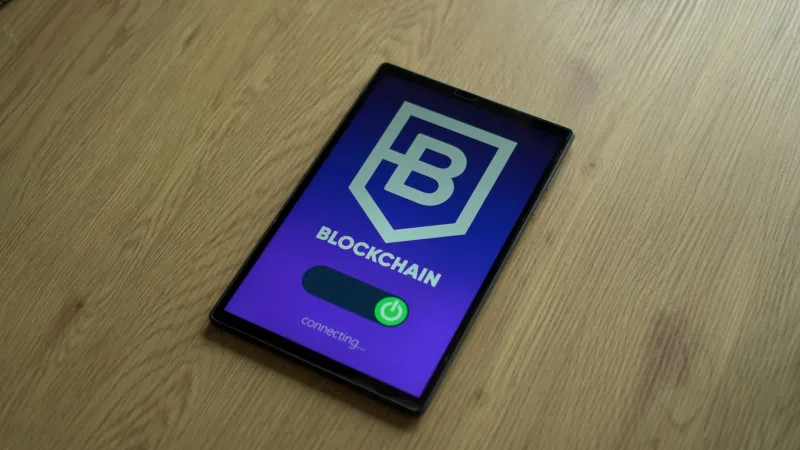
For most of the last century, provenance lived in filing cabinets. A receipt from a Chelsea gallery, a yellowed auction stub, a letter from the artist's estate — these fragile scraps of paper were the only proof that a painting was what it claimed to be. Today, that paper trail is migrating onto the blockchain, and the implications are rippling through studios, auction houses, and living rooms from Marfa to Maine.
The Ledger Replaces the Drawer
At its simplest, digital provenance attaches a permanent, tamper-resistant record to an artwork: who made it, when it changed hands, and for how much. Platforms now let collectors scan a work's certificate with a phone and watch its entire ownership history unfold — a level of transparency that would have seemed like science fiction to a dealer working the 1970s art fair circuit.
The appeal is obvious. Forged signatures and fabricated histories have haunted the American market for decades, from Knoedler Gallery's spectacular collapse to the quiet forgeries that surface at regional auctions every year. A cryptographic ledger, advocates argue, makes that kind of fraud nearly impossible.
What the Artists Are Saying
Not every painter is celebrating. In interviews with emerging and mid-career artists across the country, a familiar tension emerges: the same technology that protects their work also exposes it.
"A collector used to wonder about my process, my story, the whole arc of a piece," one Los Angeles-based painter told us. "Now they can pull up every resale price before they've even hung it. There's something lost when the mystery gets audited."
Others disagree. Sculptors and printmakers — whose work is disproportionately targeted by counterfeiters — tend to welcome the accountability. For editions in particular, a verifiable ledger functions less like surveillance and more like a signature that can't be faked.
The Dealer's Dilemma
Gallerists occupy complicated middle ground. The traditional art market has always thrived on discretion: prices whispered, buyers vetted, histories selectively told. Digital provenance threatens to flatten that opacity into open data.
Yet several New York and Chicago dealers we spoke with see opportunity rather than erosion. A work with an unbroken, publicly verifiable chain of custody commands confidence — and confidence, historically, commands price. For younger American collectors raised on transparency in everything from food sourcing to stock trading, a blockchain certificate reads less like a gimmick and more like a baseline expectation.
Trust, Verified — or Trust, Replaced?
The deeper question is philosophical. Collecting has always been part scholarship, part romance. The thrill of the hunt, the connoisseur's intuition, the story told over dinner about how a piece was found — none of that fits neatly into a database field.
Skeptics within the tech community itself acknowledge the limits. A ledger can verify that a certificate exists; it cannot verify that the certificate was honestly created in the first place. Garbage in, garbage out — immutable garbage, at that.
A Hybrid Future
The most persuasive voices in this conversation aren't maximalists. They imagine a hybrid model: the ledger handling verification while galleries, critics, and artists continue supplying the meaning. Paper and pixels, working in tandem.
For American collectors, the practical advice is straightforward. Ask what a digital certificate actually attests to. Ask who entered the original record. And remember that no technology, however elegant, substitutes for looking closely at the work itself.
The color of money may be changing, but the texture of art — the thing that made you stop in front of it in the first place — remains stubbornly, wonderfully analog.