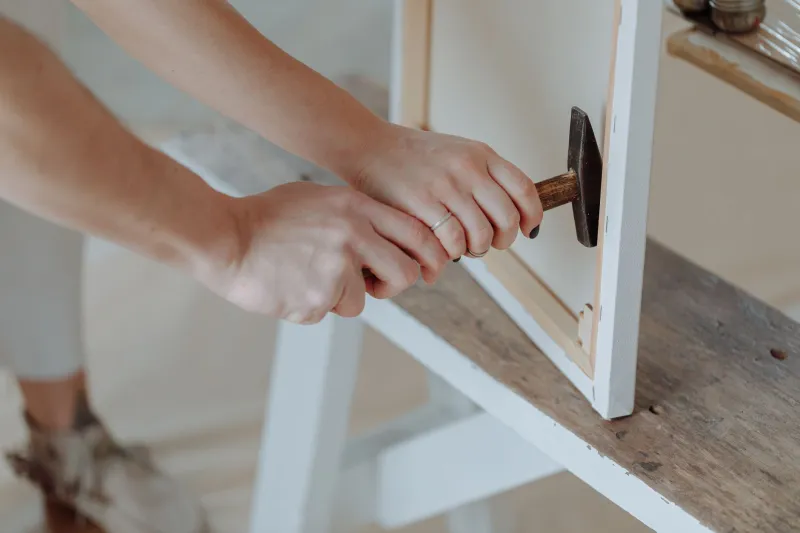
The Second Act of Curation: Where the Frame Becomes the Final Brushstroke
The collector arrived at the Chicago workshop on a Tuesday morning, carrying a small oil painting under one arm and a receipt under the other. The painting had cost eleven thousand dollars. The framing estimate was fourteen. She did not flinch.
Scenes like this unfold daily across the country's custom framing ateliers, in unmarked storefronts and second-floor studios where the American art market performs one of its most overlooked rituals. The frame, long treated as an afterthought or a decorative courtesy, has quietly become a site of serious expenditure and serious judgment. In the world of contemporary collecting, what surrounds the canvas increasingly determines how the canvas is received.
The Workshop as Backstage
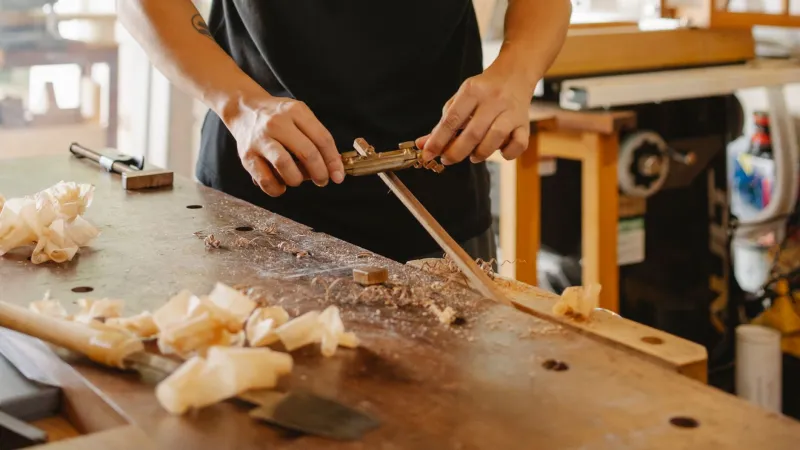
Chicago's framing trade carries a particular inheritance. The city's old-line workshops, several of them family operations now in their third and fourth generations, still house hand-carved corner samples, slabs of quarter-sawn oak, and water gilding stations that have changed little since the WPA era. Framers there speak of wood the way luthiers do — by grain, resonance, and age.
"People assume we decorate the art," one master framer told me, running a thumb along a length of raw walnut. "We don't. We listen to it. The painting already knows what it wants. Our job is to shut up and hear it."
That listening process can take weeks. A work is pinned to the wall, tested against mock borders, viewed in north light and lamplight. The wrong frame — too warm, too deep, too articulate — can flatten a subtle abstract into wallpaper or turn a restrained photograph into theater.
Los Angeles and the Blue-Chip Border
Three time zones away, the calculus shifts. Los Angeles studios serving galleries in Culver City and Hollywood work at a different tempo and a different price point, answering to registrars, conservators, and art handlers whose names appear on condition reports rather than wall labels.
Here, the frame often disappears by design. Float mounts, recessed shadow boxes, and hairline metal profiles dominate — solutions engineered to make the work appear to hover, unmediated, in space. The paradox is that achieving invisibility requires extraordinary craft. A sixteenth-of-an-inch error in a float's reveal is visible from across the room; a slight bow in a spacer casts a shadow that reads, at a glance, as a flaw in the work itself.
The studios that blue-chip galleries rely on are, in effect, the last quality-control checkpoint before art meets the public. Several framer-owners describe their role as translators — converting a gallery's registration notes and an artist's studio preferences into millimeters and miters.
When the Border Outspends the Art
The economics can startle outsiders. Collectors of works on paper routinely spend more on framing than on the purchase itself, particularly at the lower end of the print market. Museum glass alone — anti-reflective, UV-filtering, and priced accordingly — can run into four figures for a single sheet.
But the spending is not vanity. For fragile media — gouache, pastel, vintage silver prints, textile work — the frame is preservation infrastructure. Conservators note that a properly built package, with acid-free hinges, sealed barriers, and adequate depth, can add decades to a work's life. The collector paying fourteen thousand dollars to frame an eleven-thousand-dollar painting is, in part, buying time.
There is also the matter of resale. Dealers quietly acknowledge that a work returning to market in a dated or damaged frame photographs poorly, hangs poorly, and sells accordingly. Reframing before consignment has become standard practice — an admission that presentation is not separate from value but constitutive of it.
Curation in Miniature
What the best framers perform, finally, is a second act of curation. The curator at the museum decides what hangs beside what; the framer decides what the work hangs beside at all — the wall of the room it will live in, the light it will meet, the distance from which it will be seen.
This is why serious collectors develop relationships with framers the way they do with restorers or installers. The framer learns the collection's architecture, its sightlines, its palette of rooms. Over years, that knowledge compounds into something close to authorship — not of the art, but of its encounter.
For a site devoted to how contemporary art finds its voice, the lesson is an uncomfortable and liberating one: the voice is never unaccompanied. Every work arrives on a wall framed by someone's decisions — wood, gild, depth, shadow. The frame does not wear the art. In the quiet arithmetic of the American art world, the two are inseparable, and the best framers have known this all along.