The Second Pair of Hands: Rethinking Credit in the Contemporary Studio

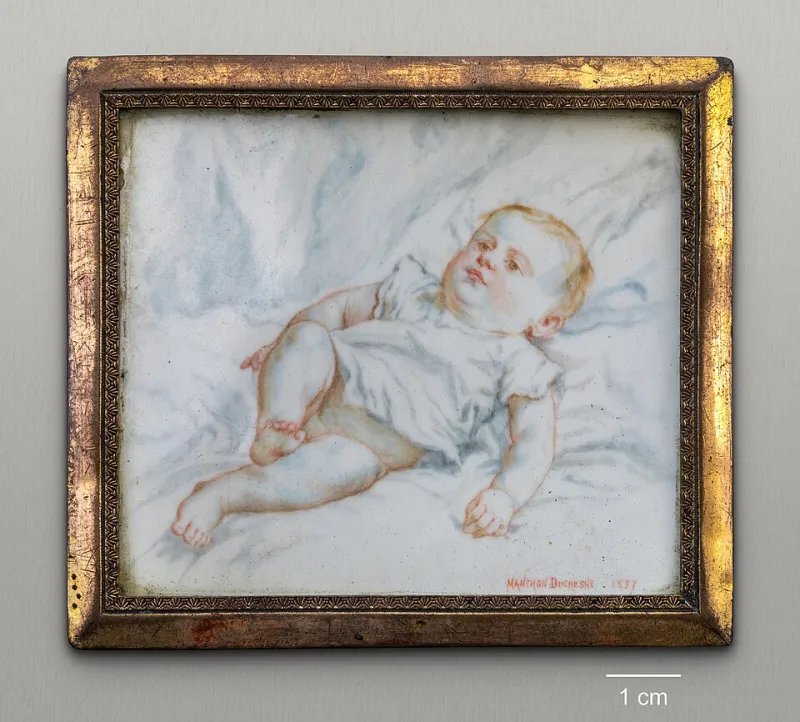
Photo: Oncewerecolours, CC BY-SA 4.0, via Wikimedia Commons
In a third-floor studio in Bushwick, a painting begins before the artist touches it. An assistant cuts Belgian linen to a specified size, stretches it to a consistent tension, applies two coats of gesso, sands between layers, and blocks in a warm ground that will never be seen. By the time the artist picks up a brush, the canvas is already a decision—one made by hands that will not appear on the label.
That arrangement is not new. Renaissance workshops ran on it; Rubens employed specialists for drapery and animals; Warhol’s Factory turned assistance into an aesthetic principle. What has changed is the scale and the silence. Contemporary painting in the United States is increasingly produced in studios that function like small ateliers, with teams handling fabrication, preparation, documentation, and, in some cases, passages of paint. The work leaves under one signature. The market has not developed a shared vocabulary for what happened before that signature arrived.
Where the Work Begins
Studio assistance spans a wide spectrum. At one end is what dealers call “support labor”: stretching, priming, building stretcher bars, mixing pigments, cleaning brushes, crating, and maintaining archives. At the other end is execution—masking, spraying, taping, rendering, and sometimes painting areas the artist has designated. Between them sits a gray zone of blocking in, underpainting, and “first passes” that can be substantial.
Artists describe the division in practical terms. A painter who works at large scale may have assistants lay in flat fields of color because the physical labor is punishing and the decision is already made. A sculptor-painter may delegate the fabrication of shaped supports. A portraitist may use assistance for backgrounds. The question is not whether assistance exists—it almost always does, at some level—but where the artist’s hand stops being a metaphor and becomes a line item.
The Line That Moves
The line is easier to draw in theory than in practice. Conceptual practices have long treated execution as secondary; Sol LeWitt’s wall drawings were instructions, not handwork. For painters committed to touch, the line matters more. A brushstroke can carry the entire argument of a practice.
Dealers and advisors say the conversation is rarely about fraud and more about expectation. Collectors who buy a painting believe they are buying a relationship to a specific sensibility, not a certificate of manual labor. Still, when a work is described as “by” an artist, the market implies a certain proximity. The absence of a shared standard means the same level of assistance can be described in radically different ways from one gallery to the next.
Auction houses have long maintained categories—“studio of,” “workshop of,” “circle of,” “after”—but those terms were built for old masters and carry a whiff of diminishment. The contemporary market has no equivalent. A painting made with two assistants and a fabricator is still “a painting by” the artist, full stop.
What the Market Says—and Doesn’t
In practice, disclosure is uneven. Some galleries include a line in the checklist or the artist’s CV noting studio assistance; most do not. Certificates of authenticity rarely address it. Condition reports describe materials, not hands. Foundations and estates, which control authentication for many major artists, vary widely in their records and their willingness to discuss process.
Collectors who ask are often given a version of the same answer: the artist is responsible for the work, the studio is an extension of the artist’s decisions, and the signature is the guarantor. That answer is legally and conceptually defensible. It is also incomplete.
The market’s hesitance is understandable. Transparency can be weaponized. A collector looking for a discount may seize on assistance as evidence of lesser value; a competitor may use it to suggest that a practice is not authentic. But silence carries its own risk. When disclosure arrives late—through a lawsuit, a departing assistant, or a probing profile—it reads as concealment even when it was simply convention.
The Case for a Colophon
A more transparent credit line would not require disclosing every task. It could be as simple as a studio note: “This work was made with the assistance of the studio team,” followed by names if the artist wishes. Film credits, architecture offices, fashion ateliers, and music production have all normalized collaboration without erasing the author. Painting could do the same.
The benefit is trust. A collector who understands how a work was made is better equipped to value what is actually being collected: the decisions, the sensibility, the sustained attention. A young assistant who sees their labor acknowledged has a clearer professional identity. And the artist gains a language for something they already know—that the studio is a place of shared effort, not a solitary myth.
What Collectors Can Ask
The questions do not need to be adversarial. Who prepared the surface? Is the artist’s hand present throughout, or are there passages executed by others? Does the studio keep records of assistance? These are the same questions a serious collector already asks about materials, provenance, and condition.
The answers will vary. What matters is that the conversation is allowed to happen. The signature on the front of a painting is a legal convention and a market convenience. It has never been a complete account of labor. Acknowledging the second pair of hands does not diminish the artist. It clarifies what the collector is actually buying—and what the studio has always known.