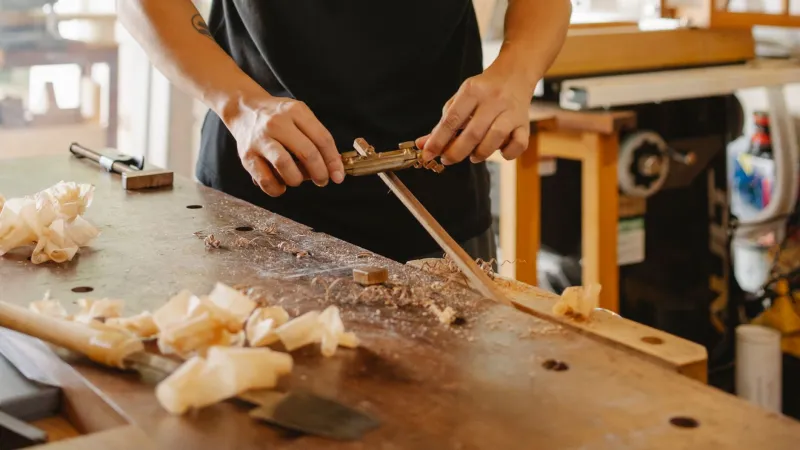
Ten Minutes or Ten Years: The Unwritten Arithmetic Behind Every Studio Price Tag
In a fourth-floor studio above a converted textile mill in Providence, a painter we'll call Mara finishes a small oil study in under an hour. Across the country, in a ramshackle warehouse outside Marfa, another artist spends eleven months on a canvas nearly the same dimensions. When both works arrive at their respective galleries, the price tags differ by a factor of twenty. Neither artist apologizes for it. Neither can fully explain it.
This is the quiet contradiction at the heart of contemporary art pricing: the market does not pay for time, at least not in any way an accountant would recognize. Yet time is never entirely absent from the conversation. To understand how American artists arrive at a number, you have to listen to what they are actually selling — and it is rarely the object alone.
The Hourly Rate No One Uses
Ask a working artist how they price a piece and the first answer is almost always a disclaimer. "I stopped dividing hours by dollars years ago," says a sculptor based in Detroit who fabricates large-scale steel works. "If I did that, my early pieces would have been charity, and my fast ones would look like frauds."
The hourly model collapses for obvious reasons. Speed is often the product of decades of practice — the ten-minute drawing carries thirty years of accumulated judgment. Many artists describe an internal conversion rate instead: a base figure per square inch or per linear foot, adjusted upward as their careers advance. Gallerists call this the "consistency principle," and collectors quietly rely on it. A mid-career painter in Santa Fe explains her system plainly: one rate for works on paper, another for canvas, a multiplier for scale, reviewed once a year. "The number has to make sense across the whole body of work," she says. "Otherwise collectors think something is wrong with the piece."
But consistency only explains the grid. It doesn't explain the outliers.
When the Story Outweighs the Surface
Dealers will tell you, sometimes reluctantly, that the most valuable ingredient in any artwork is provenance of a different kind — the narrative attached to it. A canvas made during a residency in a remote landscape, a sculpture fabricated from material salvaged from a demolished family home, a series completed after a health crisis: these carry premiums that have nothing to do with materials or hours.
"Collectors aren't buying pigment," says a gallerist in Chicago's West Loop who represents twelve emerging and mid-career artists. "They're buying the version of themselves that owns this story." She recalls a small mixed-media piece that sat unsold for a season until the artist mentioned in a walkthrough that it was made from his late mother's sewing patterns. It sold within a week, at a price well above its neighbors on the wall.
This is not cynicism; it is how value has always worked in art. What has changed is the candor. American artists under forty, raised on transparent online marketplaces and open studio Instagram accounts, speak about pricing with a directness their predecessors avoided. Many publish edition sizes, discuss materials costs, and explain why a work is priced where it is. The mystique hasn't vanished — it has simply moved from the invoice to the interview.
Reputation as Compound Interest
If labor is unreliable and story is volatile, reputation is the market's only real currency. Every exhibition, every museum acquisition, every favorable review functions as a deposit. Pricing, in this view, is less a calculation than a barometer — it registers the weather around an artist's career rather than the object in the crate.
Gallerists describe managing this with almost monetary caution. Raise prices too fast and you strand early collectors; raise them too slowly and you signal stagnation. The healthiest careers, several dealers agree, are those where the market's estimate and the artist's confidence rise in tandem, neither one running ahead of the other.
There is also the matter of who holds the pen. Artists represented by galleries in New York or Los Angeles routinely command more for comparable work than equally accomplished peers showing regionally — a fact of geography that has nothing to do with talent and everything to do with access to the collectors, advisors, and institutions that validate a number. The art world's ongoing geographic dispersion, with strong scenes in places like Marfa, Asheville, and Portland, has begun to loosen this hierarchy, but slowly.
The Intuition Line
And yet, after all the systems and spreadsheets, nearly every artist interviewed for this piece admitted to a final, unscientific step. One painter described it as "the number that lets me let the piece go." A ceramicist in North Carolina said she prices a work at the point where selling it feels like generosity rather than loss.
This is the intuition line — the threshold where economics meets attachment. Below it, the artist resents the sale; above it, the work lingers. Finding it is a skill no business school teaches, and it recalibrates with every new body of work.
For collectors, the takeaway is not that prices are arbitrary. They are layered: a foundation of material and scale, a structure of career stage and market position, and a roof of story and instinct. Two canvases of identical size can carry wildly different tags because they are not really the same product. One is an object. The other is an object plus a life.
The next time a price seems inexplicable, it may help to stop asking what the work cost and start asking what it carries. In the contemporary American market, the invisible is often the most expensive material in the room.