Brushes at Seven, Wine at Eight: Inside America's Timed Painting Boom
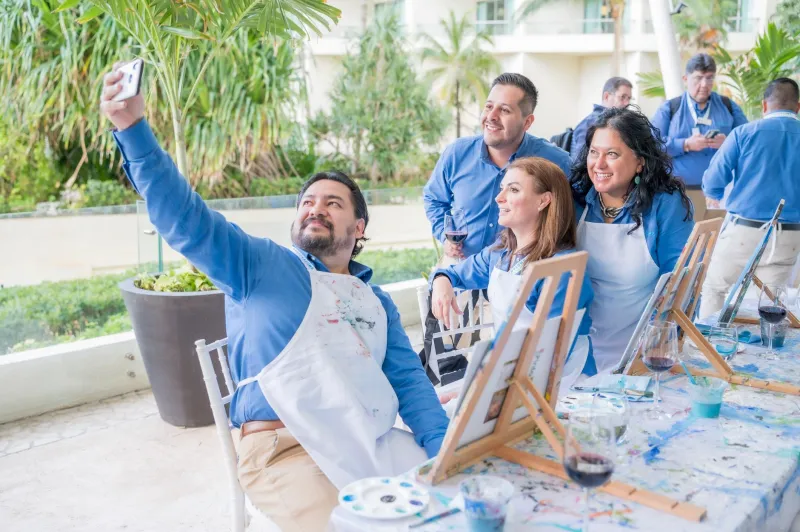
The timer on the projector screen reads 9:47, and the room sounds like a café during a thunderstorm: brushes clatter, ice shifts in plastic cups, and someone near the window announces, with genuine alarm, that her sky has turned the color of grape soda. Forty strangers are painting the same sunset. None of them will finish. All of them will leave with a canvas — and, judging by the laughter, most will come back.
Scenes like this now unfold nightly across the United States, in converted warehouses in Portland, breweries in Nashville, church basements in suburban Ohio. Timed painting events — structured sessions where beginners complete a guided canvas in one or two hours, often with drinks in hand — have matured from novelty into infrastructure. Some cities now host competitive painting leagues with standings, judges, and season finales. The format has become one of the few reliable ways American adults make new friends, and one of the newest battlegrounds in the broader attention economy.
The Economics of the Easel
Follow the money and the trend makes immediate sense. A ticket typically runs $35 to $60, a fraction of the cost of most art classes, and the margin structure favors organizers: bulk canvases, acrylics that clean up with water, and instructors who can shepherd thirty novices through a single pre-planned image. Venues love the format because it fills slow weeknights. Painters love it because it removes the two great barriers to entry — fear of judgment and fear of the blank page — by promising that everyone will produce something passable within the hour.
Critics of the model, and there are many, describe it differently: as painting by numbers with better branding, an experience commodity that packages creativity the way escape rooms package problem-solving. The canvas you take home, they note, is not really yours. It is a licensed reproduction of an instructor's design, executed with assistance, and its value lies less in the object than in the evening.
What First-Timers Say
Talk to participants, though, and the commodification argument starts to wobble. A retired schoolteacher in her first session described the experience as "the first time in twenty years I made anything with my hands that wasn't a spreadsheet." A twenty-something software engineer said he signed up because "I wanted to be bad at something in public." Their canvases were, objectively, rough. Nobody in the room cared.
This is the phenomenon's defenders' strongest point: for millions of Americans whose relationship to art is purely consumptive — scrolling, buying prints, visiting museums on vacation — a timed painting night is the only hands-on encounter with the making process they've had since childhood. Democratization doesn't require mastery. It requires a door left open.
The Trained Artists Are Split
Within the professional art community, the divide runs deeper. Some working painters dismiss the format as training a nation of copiers — that following a step-by-step demonstration teaches technique without teaching seeing, and may even reinforce the idea that art is product rather than practice. Others are more generous, pointing out that several of their own students first picked up a brush at a brewery paint night, and that the gap between a guided canvas and a real practice is exactly the gap studios and community colleges exist to fill.
A middle position has emerged among organizers themselves: events that loosen the script, offering open subjects instead of a single reference image, or inviting local artists to design sessions and take a cut. Whether that evolution sustains or the standardized party format wins is, in truth, a market question — and the market has so far favored consistency over risk.
A Ritual, Whatever It Is
It's tempting to settle the debate by asking what the evenings actually produce. Not, mostly, art worth collecting. But ritual — genuine, repeated, communal ritual — has become scarce in American life, and this is one. Strangers sit together, make something imperfect, and are sent home with evidence. If that's commodification, it is also, uncomfortably for the skeptics, culture.
The timer hits zero. The room applauds itself. Forty canvases dry on tables that will be cleared within the hour, and the paintings go home to refrigerators, hallways, and, eventually, donation piles. The art world may not rate the objects highly. But as an entry point — a first touch between the public and the act of making — the timed painting night has quietly become one of the most consequential doors in the American art economy. Someone still has to walk through it.