Years on Hold: Inside the Quiet Queue Where American Art Is Promised Before It Exists
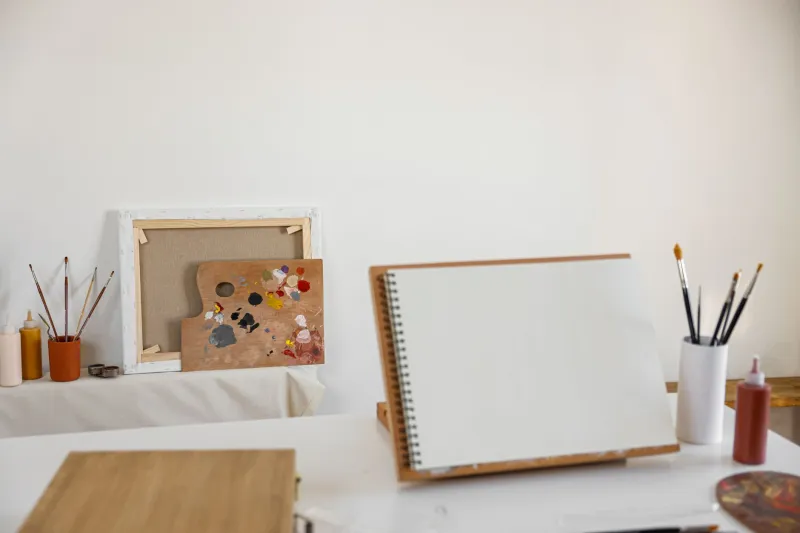
In a third-floor studio in Marfa, a painter keeps a spiral notebook that functions less like an artist's journal and more like a ledger of deferred desire. Each page holds names — collectors, mostly, though a few are curators and one is a museum registrar — who have asked, politely and sometimes urgently, when her next available work might reach the market. The answer, she tells them, is: not for at least two years. They thank her. They ask to be kept on the list. Almost none of them walk away.
This is the waitlist economy, and it has become one of the defining — and least examined — structures in contemporary American art. Before a single brushstroke lands, scarcity has already been engineered. Demand has been banked. The painting, in a sense, is sold before it is imagined.
The Queue as a Form of Currency
Waiting lists are not new. Dealers have long managed allocation for artists whose supply could never meet institutional and private appetite. What has changed is the visibility and the ambition of the practice. In Los Angeles, New York, and increasingly in secondary markets like Santa Fe and Asheville, gallerists openly describe years-long queues for mid-career painters whose prices have not yet caught up to their demand.
The queue itself becomes a signal. A collector who hears that a studio has closed its list does not conclude the artist is difficult to buy from; they conclude the artist is worth waiting for. Scarcity, once an accident of production, is now a deliberate instrument of positioning. A gallery can accept fifty inquiries and quietly place twenty names in order, knowing that the mere existence of the order — spoken of in hushed terms at dinners and fairs — raises the perceived value of everything the artist has already made.
There is a psychological engine here that retailers in other industries understand well. The queue converts a transaction into a membership. Collectors describe the wait not as a barrier but as a rite of passage, a credential that can be mentioned in future negotiations with other dealers. One New York collector, who asked that his name be withheld, put it plainly: 'Getting the call is the point. Anyone with a credit card can buy a print. Waiting three years for a studio visit and an allocation — that means something.'
The Ethics of Selling Tomorrow's Work
Not everyone in the trade is comfortable. Pre-selling — committing works to collectors before they are finished, or in some cases before they are begun — raises questions the art market has historically preferred to leave vague. What exactly is being purchased? A future object? A position in line? A relationship?
Artists themselves are divided. Some see the waitlist as a humane alternative to the churn of the open market: rather than racing to produce for demand, they can work at their own tempo, secure in the knowledge that the work will find homes. Others describe it as a kind of mortgage on the imagination. One ceramicist in Philadelphia described the sensation of opening her kiln knowing that every piece inside was already promised. 'The discovery was gone,' she said. 'I was manufacturing deliveries.'
Dealers, for their part, point out that waitlists protect artists from the cruelest feature of the open market — the flip. By allocating works to collectors with genuine long-term commitments rather than the fastest checkbooks, galleries attempt to keep paintings out of the resale churn that has flattened so many young careers. It is a curatorial act disguised as a commercial one, and sometimes it is exactly that. Sometimes it is not.
When Demand Outruns the Studio Clock
The strain shows in the studio. An artist whose queue stretches to three years faces a quiet mathematical crisis: the market's appetite for new work has decoupled from the human pace of making it. Some respond by raising prices until demand cools. Some expand — hiring studio assistants, shifting toward editions and multiples. And some simply burn out, unable to reconcile the obligation of the list with the uncertainty that first made the work worth waiting for.
There is also the question of what happens to the people in line. Lists are not contracts. They are promises made in emails and gallery handshakes, and they can be re-ordered, quietly truncated, or abandoned when an artist's gallery changes or an institution comes calling with a museum acquisition. Collectors who have waited years occasionally discover that the queue was never quite what they believed — that preference flowed to a museum trustee, a celebrity, or simply a better-connected name.
And yet the queue persists, and grows, because it offers something the open market cannot: the feeling that art still operates on human time. In an economy of instant acquisition, the waitlist insists that some things cannot be expedited — that a painting takes the seasons it takes, and that wanting it for years might be part of what makes it yours.
Whether that is a philosophy or a marketing strategy is, increasingly, the question the American art world has not yet answered. The notebook in Marfa keeps filling either way. The work, the painter insists, will come when it comes. The names on the list say they believe her. Perhaps they do. Perhaps, by now, the waiting has become the point.