Ledgers in the Studio: The Debt American Artists Rarely Name Out Loud
Photo: c-g., CC BY 2.0, via Wikimedia Commons
The Question Nobody Asks at Studio Visits
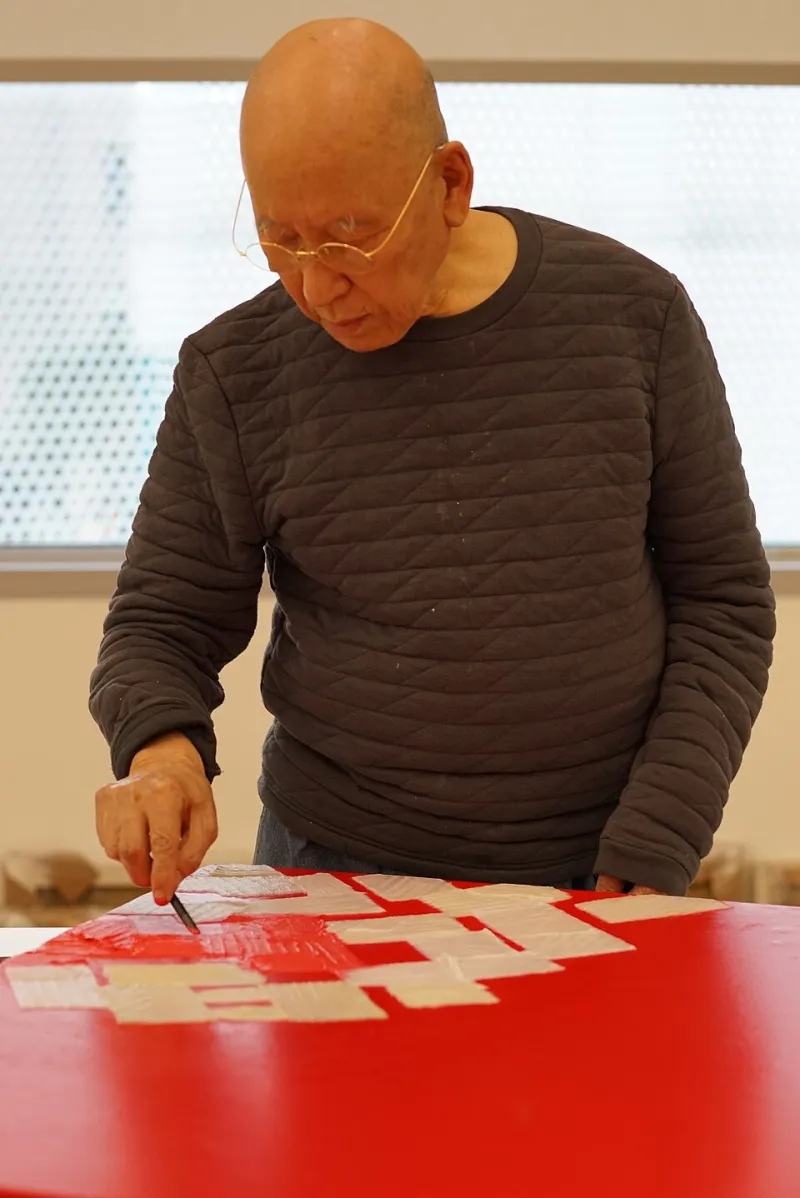
Walk into any artist's studio in Los Angeles, Marfa, or the Bushwick annexes of Brooklyn, and you will find the same polite choreography. The work is discussed. The process is admired. The light is complimented. What almost never enters the conversation is the balance on the artist's student loans, the shift scheduled at the restaurant tonight, or the credit card quietly financing the stretchers stacked in the corner.
Money, in the contemporary art world, has long been treated the way Victorian households treated illness — present everywhere, acknowledged nowhere. Collectors talk about acquisition budgets freely; dealers talk about placement and provenance. The people making the work have historically been expected to perform a kind of financial anonymity, as though a candid admission of economic strain might somehow devalue the object on the wall.
That silence is starting to crack.
What the Numbers Actually Look Like
The arithmetic of an American art career is rarely flattering. Graduate programs in fine art routinely leave artists carrying six figures of debt into a field with no salary floor. Rent for adequate studio space in cities with functioning art markets — New York, Chicago, Santa Fe — has climbed well past what most early-career incomes can absorb. Materials alone can consume a month's take-home pay for a painter working at any serious scale.
The result is a professional class sustained by an invisible architecture of survival: the teaching adjunct who paints until midnight, the printmaker whose edition sales subsidize the editions that don't sell, the sculptor who fabricates other people's visions by day and hauls her own to a storage unit by night.
None of this is secret, exactly. It is simply unspoken — and that distinction has consequences.
The Cost of Pretending
Artists who have begun speaking publicly about their finances describe the old silence as a kind of tax. Pretending to be solvent shaped decisions far beyond the checkbook. It meant accepting exhibitions that charged participation fees because declining felt like admitting weakness. It meant underpricing work for years, because the alternative — raising prices to a sustainable level — risked the accusation of being 'in it for the money.'
The performance also distorted the work itself. Artists describe turning down ambitious, material-heavy projects in favor of whatever could be made cheaply and quickly. Others describe the opposite: spending beyond their means to meet an expected image of professional production, then scrambling to recover. Either way, the market's expectations were being set by an economy nobody would discuss.
A New Candidness Takes Hold
What has changed is partly generational and partly practical. Younger artists, weaned on public discussions of student debt that now define much of American adulthood, are less inclined to treat insolvency as a personal failing. Online, painters post real numbers alongside studio shots. Peer groups that once operated as critique circles now double as informal financial salons, where members compare health insurance strategies, discuss consignment terms, and warn each other about galleries that pay slowly.
Some institutions have followed. Grant programs increasingly ask not just what an artist plans to make, but what they need to survive while making it. A handful of residency programs have begun publishing the true cost structure of artistic life, treating transparency as a curatorial value rather than an embarrassment.
When the Ledger Enters the Work
The most interesting development, though, may be aesthetic. A number of contemporary artists have begun treating debt itself as subject matter — ledgers, invoices, credit scores, and loan statements appearing as raw material in drawings, prints, and installations. Where previous generations mined memory and landscape, this one is increasingly willing to mine the spreadsheet.
The results resist easy categorization. Some of the work is accusatory, some elegiac, some dryly funny. What it shares is a refusal to keep the economic life of art making quarantined from its emotional life. In a field that has always claimed to tell the truth about human experience, the truth about money was the last frontier.
Collectors, for their part, have not fled. If anything, work that acknowledges its own conditions of production has proven durable — partly because it is honest, and partly because every serious buyer suspects, correctly, that the romantic myth of the artist who exists above money was always a fiction that served someone other than the artist.
Why the Conversation Matters
An art world that permits honest talk about debt is an art world that retains more artists. The ones leaving today are rarely the least talented; they are the least subsidized — those without family support, spousal income, or an early market break. Every artist lost to silence narrows the range of voices the culture gets to hear.
The shift now underway is small, uneven, and largely unglamorous. It looks like a painter saying the real number out loud. It looks like a dealer who pays on time and says so publicly. It looks like a studio visit where the question is finally asked — not as intrusion, but as respect.
The work, by every account, is better for it.