Where the Silence Gets In: Inside the Studios of Artists Who Refuse to Press Play
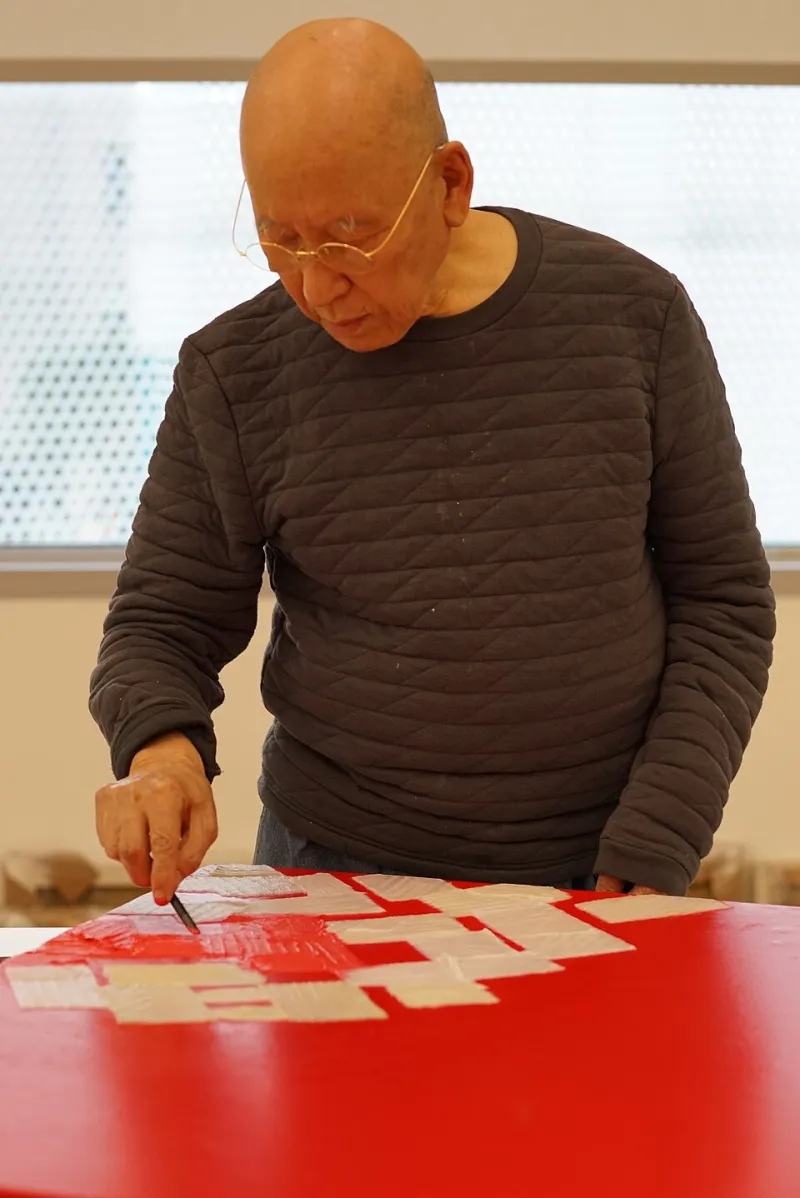
Photo: 선의의 바람, CC BY-SA 4.0, via Wikimedia Commons
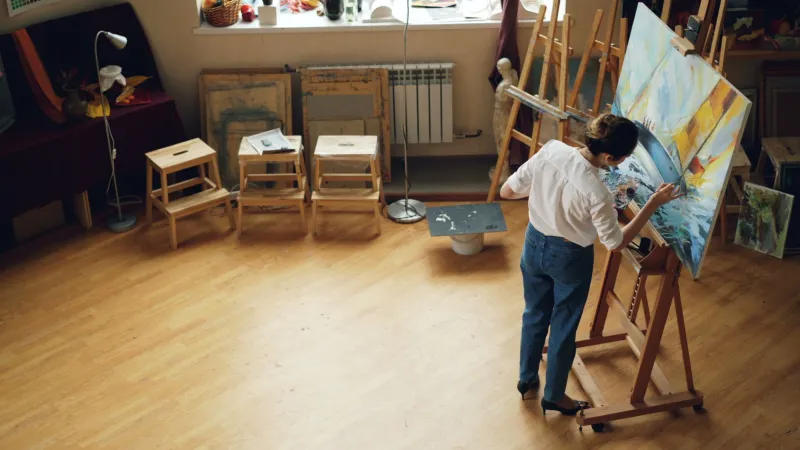
In a converted barn outside Hudson, New York, the loudest thing in the room is the oil furnace. No radio. No streaming queue. No phone on the workbench. The painter who works here begins each morning the same way: she stands at the easel for a full minute before touching a brush, listening to nothing in particular, waiting for the room to settle.
"You can't hear what a surface wants," she says, "if you're narrating over it."
She is part of a quiet but measurable shift in American studios. At a moment when the culture rewards constant audio—true crime during the commute, playlists during the workday, podcasts during the dishes—a striking number of contemporary artists have gone the other direction, treating silence not as absence but as a medium they mix alongside pigment and steel.
The Discipline of Not Listening
Ask around and the pattern repeats in every medium and every region. A sculptor in Marfa describes pouring bronze in what he calls "the quietest hour of the Texas day," before the highway wakes up. A Los Angeles ceramicist keeps her phone in the car, not the studio. A printmaker in Providence works exclusively in silence after a decade of listening, saying the change "doubled the length of my attention span and halved the number of prints I regret."
None of these artists frame the practice as mystical. Most describe it as practical, even austere—a way of protecting the one resource the studio actually depends on. Music, they note, is emotional direction. It tells you what to feel before the work has told you anything. Silence removes the script.
The painter from Hudson puts it more bluntly: "Every playlist is a mood ring. I'd rather find out what the painting is doing on its own terms."
What Collectors Are Hearing
Whether audiences can detect a silent studio is, of course, unfalsifiable. But there is a case to be made that they respond to its effects. Work made in sustained quiet tends toward the patient—long gradations, surfaces built in thin successive layers, compositions that withhold their drama. Gallerists across the country report that the most frequently repeated word in viewing rooms is, tellingly, calm.
That calm reads as meditative without being decorative. It is the difference between a painting that soothes and a painting that slows you down. Collectors, particularly those assembling contemplative collections in an age of infinite scroll, seem to know the distinction when they stand in front of it.
One advisor in Chicago describes the phenomenon this way: "The best new work doesn't grab you across the room. It makes you cross the room. That's not an accident—that's attention, transferred."
The Silent Studio Goes Public
Paradoxically, a practice defined by refusing to broadcast has become broadcastable. On social media, 'silent studio' videos—long, wordless clips of hands working, no soundtrack, no voiceover—have become a genre of their own. Millions of viewers watch a squeegee pull ink across a screen or a chisel find a seam, and the comment sections read like a collective exhale.
Skeptics see a contradiction: silence packaged as content is still content. But the artists featured in these clips are largely unbothered by the irony. For them, the video is a record of the working condition, not a substitute for it. The audience isn't being entertained into focus; it is being invited to sit with someone who is already sitting with something.
There is something distinctly American in the whole enterprise. This is a country that industrialized noise—the assembly line, the radio jingle, the open-plan office—and then invented the retreat from it, from Thoreau's pond to the minimalist compositions of the postwar avant-garde. The silent studio belongs to that lineage: not quiet as escape, but quiet as method.
Learning to Stay in the Room
For younger artists, the challenge is less romantic than logistical. The same devices that deliver studio reference and art-world community also deliver the noise. Many describe the practice as a trained skill, built in increments—first an hour without audio, then a morning, then the whole day. Some keep a notebook of what they notice in the first silent weeks: the sound of a pencil at different pressures, the way a canvas absorbs a stroke differently depending on the humidity, the thoughts that surface once nothing else is competing.
What emerges from those notes is consistent. Silence, it turns out, is not empty. It is full of small information—the scratch of a palette knife, the tick of a radiator, the rhythm of one's own hesitation. Artists who work in it say the work becomes more honest because there is nothing between them and the next decision.
The sculptor in Marfa offers the simplest formulation: "Noise gives you somewhere else to be. Silence leaves you standing right in front of the thing. Eventually you have to deal with it."
For collectors standing in front of the resulting work, that reckoning may be exactly what they're sensing. In an art world that rarely stops talking, the most radical gesture available to an artist may be to close the door, turn nothing on, and let the room speak first.