The Weight of Nothing: How American Sculptors Learned to Design Around Absence
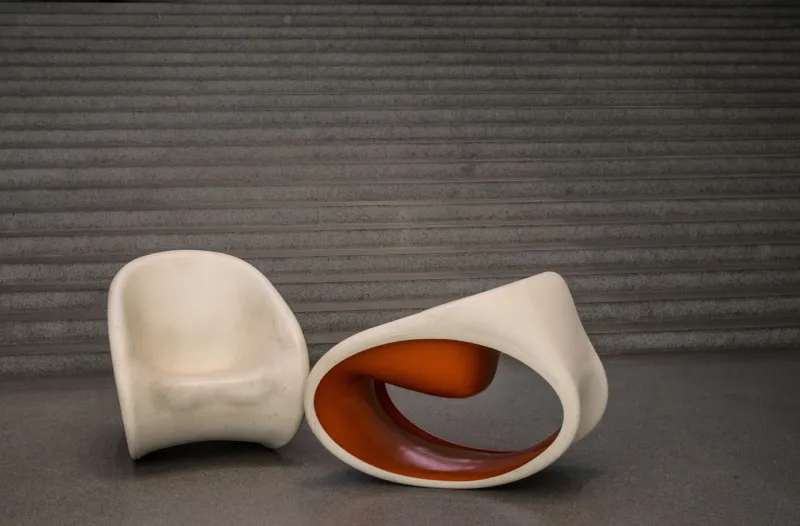
Walk into the right exhibition today and you may find yourself standing in a room that appears, at first glance, to be mostly empty. A single cast-bronze form rests on the floor, far from the walls. The ceiling stretches above. The silence is not accidental—it is the work.
For a growing cohort of American sculptors and installation artists, negative space has stopped being the leftover around the art and become the art itself. Emptiness, long the province of minimalists and Zen gardens, is now being carved, cast, and choreographed with the same rigor once reserved for marble and steel.
Emptiness as a Studio Decision
The shift is visible in the choices artists make before a single object is fabricated. Plinths are placed not to display work but to frame the air around it. Galleries are divided so that visitors must cross a deliberate void before reaching the next piece. In fabrication documents—those unglamorous spreadsheets that accompany every serious installation—lines now appear for "clearance," "sightlines," and "breath."
"I spend more time deciding what stays out of the room than what goes in," one Brooklyn-based sculptor told us, requesting that the focus remain on the work rather than the name. "The void is the expensive part. It costs me square footage, it costs me inventory, it costs me the comfort of looking busy."
That discomfort is precisely the point. In a culture saturated with feeds, notifications, and infinite scroll, an artwork that refuses to fill the frame makes an argument few other objects can make.
Three Practices Built on Absence
Consider three artists, working at different scales, who have made the empty their medium.
The first, a Midwestern sculptor in her fifties, produces massive cor-ten steel rings that stand alone in vast rooms. The rings themselves are modest—six feet in diameter, unadorned. What collectors acquire, she insists, is the halo of space the ring claims and defends. Her recent survey in Kansas City devoted nearly 2,000 square feet to a single work. Attendance doubled the museum's projection.
The second, a younger artist in Los Angeles, works in reverse: she fills a room completely, then removes elements one by one until the composition collapses into balance. The final installation often contains three objects in a space built for thirty. Her process—documented in painstaking photographs—has become as collectible as the residue she leaves behind.
The third works at architectural scale, negotiating with developers to leave entire floors of new buildings unfinished: raw concrete, one light source, a single suspended element. These "held rooms," as she calls them, are deeded to a foundation so the emptiness cannot be leased away. In a real estate market that prices every square foot, permanently preserving nothing may be the most radical act of contemporary patronage.
Why Collectors Are Paying for the Void
The market has noticed. Works that command space—installations with generous footprints, sculptures sold with stipulated clearance requirements—are quietly outperforming denser, more object-heavy pieces at comparable career stages. Advisors report that clients, particularly younger ones, increasingly ask not "how big is it?" but "how much room does it need?"
Part of the premium is practical: sparse works demand wall-to-wall attention, and few collectors can offer it. But part is emotional. A sculpture that consumes a room gives its owner a daily encounter with stillness—a domestic counterweight to the noise of the screen. In this sense, buying emptiness is less a display of wealth than a purchase of attention, the scarcest commodity of the age.
Gallerists have adapted. Floor plans now travel with condition reports. Some galleries send installers to a collector's home weeks in advance, not to hang anything, but simply to measure the quiet.
What the Digital Age Has Done to Our Appetite
It is tempting to read the movement as pure reaction—a pendulum swing against the infinite feed. The truth is more interesting. Artists who grew up online understand compression intimately; they know exactly how much content a frame can hold. Their choice to withhold is not innocence but strategy.
Negative space, in this light, is a form of hospitality. It trusts the viewer to bring something into the room rather than demanding the room supply everything. Museums have begun programming "slow look" sessions around sparse installations—twenty minutes, one work, no phones—and report that visitors linger longer in empty galleries than in crowded ones.
The Space Ahead
None of this suggests that density is dead. Baroque excess thrives in biennials and art fairs alike. But the rise of deliberate absence marks a maturing of American contemporary practice: a willingness to let the viewer breathe, to let the room speak, to let nothing carry weight.
The next time you step into a gallery and wonder whether the show has started, consider that it may have already ended—that everything else was removed so you could arrive. In the hands of these artists, silence is not the absence of art. It is the art, holding its breath and waiting for you to notice.